The Day I Learned to Stop Forcing It
4 min
I’m back now.
Back from the holiday trip, back in my routine, back in my bed, but still carrying that feeling that always follows me home to New York after time in West Africa. Over the holiday break, I traveled to Lagos, Nigeria. Before I get into a little “aha” moment I had while I was there, one that honestly surprised me, I want to name something I rarely say out loud but always feel deeply: being home in West Africa does something to my body.
There’s the sunshine, of course. The colors. The energy. The aliveness of everything. But there’s also something else. There’s something about being surrounded by faces that look like mine, where my complexion is the norm and I don’t stand out, where I’m not “other,” that makes my body loosen in a way I didn’t even realize it needed. It’s like my nervous system finally stops bracing. It’s ease without explanation. Belonging without effort.
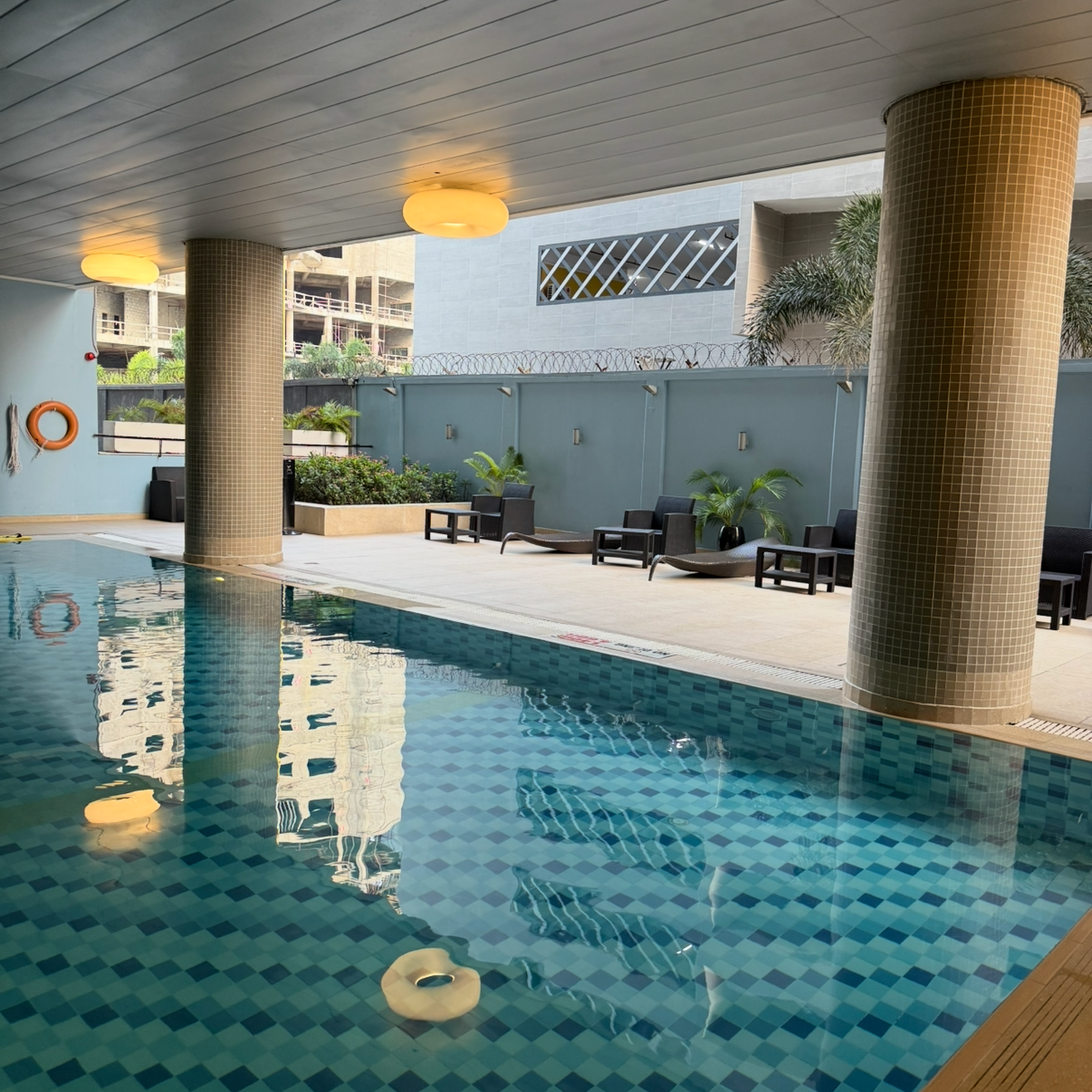
And still, it didn’t take much for my body to return to what it knows best: bracing. The contrast surprised me. Even in a place that makes me exhale, my instinct was to grip and force my way forward. I noticed it most clearly the moment I stepped into the water. While I was in Lagos, I started private swimming lessons.
In my head, this was about fitness and fun. I pictured myself one day jumping off boats and cliffs without hesitation. I even imagined working off the egusi soup with eba and the generous servings of jollof rice I’d been enjoying all trip. Swimming is a full-body workout: strength, stamina, discipline. And yes, it gave me the workout. But the biggest lesson I learned had nothing to do with exercise. It was about relaxation, the kind that feels counterintuitive, almost wrong at first.
In the beginning, I did what I always do when I’m learning something new: I gave it my all, but I was unconsciously forcing it. Forcing my arms to move faster. Forcing my body to stay straight. Forcing my legs to kick harder. Forcing myself to get it right. And the more I forced, the worse it got. I’d tense my entire body. I’d hold my breath, trying so hard to look like I had it under control that I lost the rhythm completely. I’d fight the water. It wasn’t graceful. It wasn’t even effective. It was exhausting.
Then my instructor kept saying something that sounded almost too simple: “Relax.” Not in the dismissive way people say it when they don’t understand what you’re carrying, but in the practical way. Relax your hands. Relax your feet. Breathe. Trust the water. It’s one thing to hear “relax.” It’s another thing to embody it.
By the third lesson, I finally softened, just slightly, and everything shifted. My body moved more easily. I floated better. I lasted longer. Not because I was doing less, but because I stopped trying to overpower the moment. I wasn’t fighting anymore. I was working with the water instead of against it.
I left that lesson thinking, I’m not relaxing at all. And then it hit me: this isn’t just about swimming. This is about life.
And I know I’m not alone in the forcing. How often do we do this? How often do we try to muscle our way through everything? We force the conversation, force the clarity, force the timeline, force the breakthrough. We force ourselves to be productive when we’re depleted. We force ourselves to be okay when we’re actually not. We do it because force is familiar. Force makes us feel in control. And in many ways, we’re taught that this is what progress looks like. If you want something, you push. If you want to succeed, you strain. If you want to get to the other side, you grip tight and hold on harder.
But what if that’s not the full truth?
Swimming reminded me that effort without ease doesn’t move you forward; it just wears you out. And it’s not that effort doesn’t matter. It does. But force isn’t the only kind of effort. There’s another kind that looks softer on the outside and stronger on the inside: the effort of breath, the effort of presence, the effort of maintaining calm while you move, and the effort of trusting something you can’t control, like water.
Because that’s what I realized in the pool: ease creates momentum. Not force. Ease as in learning how to stay open. Ease as in learning how to breathe through the process. Ease as in learning how to engage without tightening your whole body.
Sometimes what carries us forward isn’t more effort. It’s more exhale. More softness. More willingness to meet life without clenched fists.
And since I’ve been back, I’ve been sitting with a question: where am I forcing when I could soften? Not where I should quit. Not where I should stop trying. Not where I should care less. But where I could stop fighting. Where I could loosen my grip. Where I could breathe and still move.
I went to Nigeria expecting a workout. I came home with a lesson I’m still learning: you don’t have to force your way into progress. Sometimes, the thing you’re looking for responds best to ease.
Join the Kume Community
Reflections, grounding tools, and gentle reminders to support your inner world - delivered to your inbox.